
The Mad Hatter: Chimney Repair Services in Martinsville IN
At The Mad Hatter, we take pride in helping Martinsville homeowners keep their chimneys performing as reliably and safely as possible through every season. Our team handles everything from mortar restoration to chimney leak repair to full structural rebuilds when needed. We combine decades of hands-on experience with a commitment to craftsmanship so your chimney is better protected against Indiana’s shifting seasons, freeze/thaw cycles, and the natural wear that comes with years of use.
What Problems Can Chimney Repairs Solve?
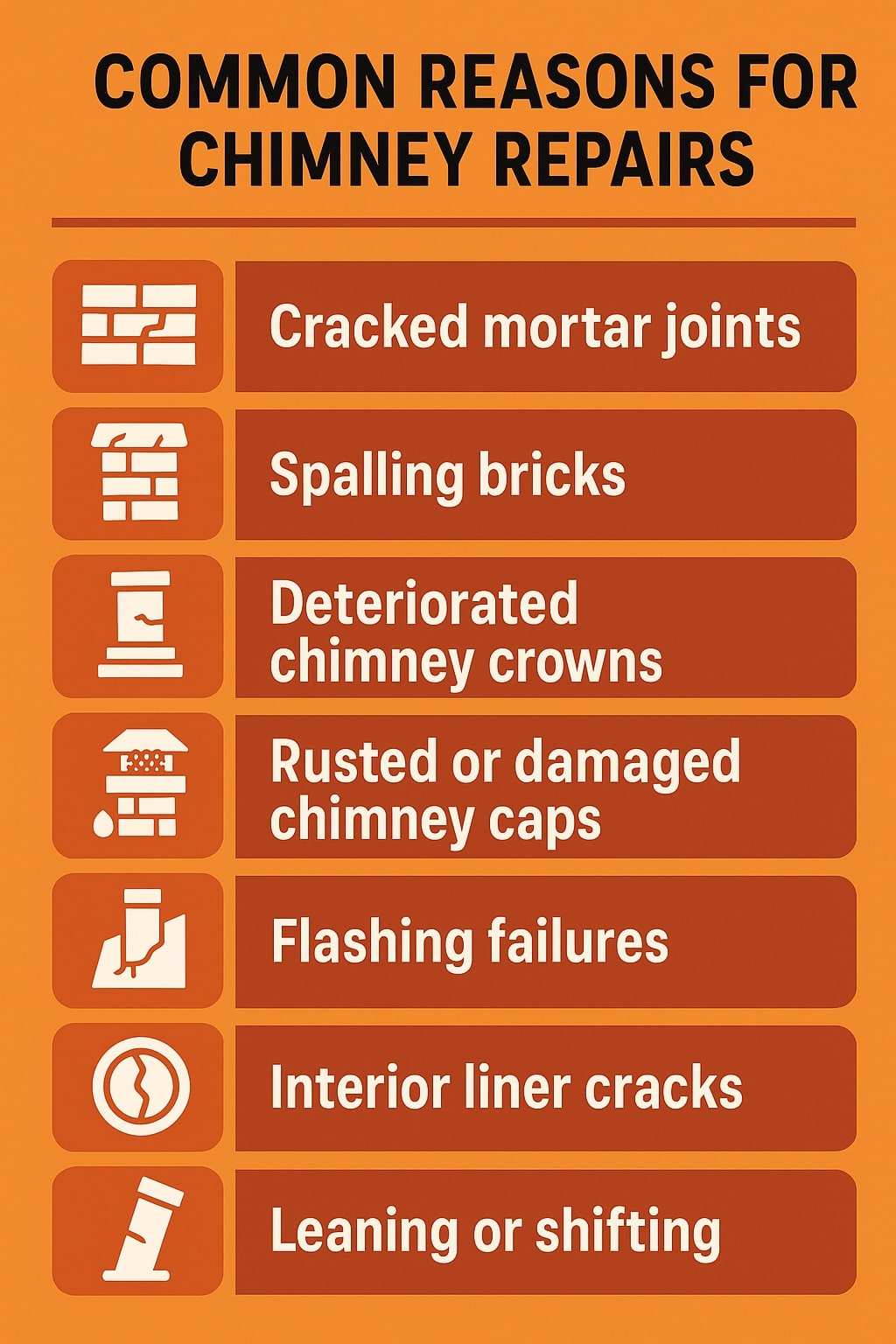
Chimney repairs address both cosmetic issues and serious structural concerns that can affect performance, safety, and long-term stability. When we evaluate a chimney, we look for any signs that its masonry, liner, crown, cap, or flashing are no longer offering the protection they should. Common issues include:
- Cracked mortar joints allowing moisture to enter
- Spalling bricks caused by freeze–thaw weathering
- Deteriorated chimney crowns letting water soak into the masonry
- Rusted or damaged chimney caps
- Flashing failures that leak during storms
- Interior liner cracks creating draft or safety concerns
- Leaning or shifting chimneys due to settling or foundation movement
We also check for deeper, hidden concerns like subtle flue damage, early-stage water intrusion, or drafting issues that aren’t always obvious to the homeowner. Our goal is to restore your chimney so it works as dependably and cleanly as possible every time you use your fireplace or stove.
Why We Love Serving Martinsville IN
Martinsville is a community with a mix of historic homes, new developments, and scenic outdoor destinations. We enjoy helping homeowners here preserve both the charm and functionality of their fireplaces. From strolls through the Morgan County Courthouse Square Historic District to peaceful afternoons at Jimmy Nash City Park, Martinsville offers small-town character and natural beauty that residents take pride in. It is also close to attractions like Morgan-Monroe State Forest where many families spend weekends hiking, fishing, and enjoying the outdoors. We are grateful to serve an area with such a strong sense of community and history.
What Early Warning Signs Suggest My Chimney Needs Repair?
Homeowners often ask us how to know when a chimney issue is developing before it becomes a bigger problem. There are several early signs to watch for, and catching them early can help you avoid more extensive masonry or structural damage. Some indicators include:
- Small cracks forming between mortar joints
- Light flaking on the bricks that worsens after winter
- Efflorescence or white powdery streaks suggesting moisture intrusion
- New or worsening odors after rain
- A damper that becomes harder to operate
- Water staining on ceilings or walls near the chimney
- Rust showing up inside the firebox or on the damper
Another sign we often see is a subtle lean or shift in the chimney stack. Homeowners usually notice this when comparing their chimney to a nearby window frame or siding line. Even gentle leaning may signal foundation settling or compromised mortar. We also address questions like: Do earthquakes or seismic tremors loosen mortar joints enough to create dangerous flue gaps? They can, even in regions with mild tremors, which is why professional inspection is so important. And we regularly hear: How fast can crumbling mortar compromise a chimney’s stability? In some cases one wet season combined with freezing temperatures can accelerate deterioration significantly.
We thoroughly evaluate all these factors during a chimney inspection and provide repair solutions tailored to your system’s condition.
Does Weather in Indiana Make Chimney Deterioration Worse?
Indiana weather is often unpredictable and Martinsville sees its fair share of temperature swings, humidity, heavy rain, and freezing winters. All of these conditions can strain a chimney’s masonry. Freeze–thaw cycles are among the most damaging. When moisture seeps into small cracks during fall or winter and freezes overnight, it expands and widens the gaps. Repeating this cycle can cause bricks to crumble or spall faster than expected.
Windstorms can also affect exterior stability. Many homeowners ask: How do chimneys hold up during tornadoes or high-wind storms? Well-built chimneys tend to withstand these events better, but vulnerable mortar joints, loose bricks, or deteriorated crowns can worsen under strong winds. We often reinforce or rebuild upper chimney sections that have shifted after a severe storm.
Another seasonal concern is what happens if you light a fire when the flue is still damp after heavy rain. Damp interiors can affect draft and may encourage steam expansion inside the flue which can worsen existing cracks or gaps. Waterproofing and crown repairs help reduce these moisture problems, and our team often recommends them for Martinsville homes where rain exposure is frequent.
Are Older Chimneys More Prone to Hidden Damage?
Martinsville has many older homes, and these chimneys often need specialized attention. Homeowners with historic or unlined chimneys often ask about hidden decay: Are old, unlined chimneys more prone to interior deterioration even when the exterior bricks look strong? The answer is often yes. Without a liner, heat and combustion byproducts contact the bare masonry. Over decades this can erode mortar, create gaps, loosen bricks, and leave small voids that compromise draft and increase risk for internal decay.
Another concern is whether construction changes around a home affect the chimney. We get the question frequently: Can a chimney’s draft be affected by nearby construction, new roofs, or trees years after the house was built? Absolutely. Changes in wind patterns or alterations in roof pitch can influence airflow around the chimney. If smoke escapes slowly or backups occur during windy conditions, nearby changes could be part of the cause.
During inspections we use modern tools like cameras and specialized lighting that help us detect microscopic cracks in liners or interior walls. These cracks are often invisible from above or below but can still allow gases or heat to escape into vulnerable areas. With older chimneys, these details matter.
What Kind of Repairs Might My Chimney Need?
Every chimney is unique and the repairs we recommend are based on a thorough inspection. Typical repair services we provide include:
- Tuckpointing deteriorated mortar
- Replacing damaged or spalling bricks
- Rebuilding chimney crowns
- Installing or repairing chimney caps
- Waterproofing exterior masonry
- Relining a damaged or unlined flue
- Repairing or replacing chimney flashing
- Partial or full chimney rebuilds when stability is compromised
We also address unique homeowner concerns. For example, we are often asked: What early signs show that a leaning or cracking chimney is at risk of partial collapse? Indicators include widening gaps in mortar, bricks that sound hollow when tapped, or sudden increases in interior smoke movement. And regarding natural disasters, after a flood or hurricane, what steps should homeowners take before using their fireplace again? An inspection is essential because moisture can penetrate hidden areas and weaken structural components more quickly than expected.
We help Martinsville homeowners understand exactly what repairs their system needs and why, and we always walk you through the process before we begin work.
What About Chimney Repairs After Creosote or Draft Problems?
Repair needs sometimes emerge after performance issues. One of the most common questions we hear is: Can a single missed annual inspection allow enough creosote to ignite a chimney fire the following season? It can. Creosote buildup can escalate quickly depending on how often you burn, the moisture content of your wood, and how well your chimney drafts. If a small chimney fire occurs, even one you never notice, it can crack tiles, damage the liner, or loosen mortar inside the flue.
Another frequent concern involves burning different fuels. How does burning wood, pellets, or gas affect chimney wear? Wood produces creosote and moisture that require routine sweeping. Pellet appliances burn cleaner but still move air through the flue which can create fine particulate buildup. Gas appliances produce moisture and acidic condensates that can corrode liners if repairs and inspections are skipped. Each fuel impacts the flue differently which is why repairs are sometimes tailored to the appliance you use.
Even seasonal debris plays a role. Many homeowners are surprised to learn that spring pollen or autumn leaves can contribute to blockages or moisture retention that affect the chimney long before winter fires begin.
Our job is to identify the root cause of these problems, repair any damage, and help restore your system’s performance as efficiently as possible.
Call The Mad Hatter for Chimney Repair in Martinsville IN
If you suspect your chimney needs attention or you simply want peace of mind before burning season begins, reach out to us at The Mad Hatter. We offer detailed inspections, long-lasting repairs, and a commitment to helping Martinsville homeowners keep their fireplaces running as safely and dependably as possible. Contact us today to schedule service and let our experienced team restore your chimney with skill and care.